Our technology: why Popcorn is building its own mobile core network
Faster global connectivity, fewer interruptions

 Neel PopatMay 2026 in Product
When we started Popcorn, the idea was embarrassingly simple: your phone should just work, wherever you are.
We came up with the idea because we needed it ourselves. Try paying for a kitesurf lesson in Brazil when your phone has no signal, and you can find yourself in a nearby town 30 minutes later, still scrambling to pay.
In 2026, a phone plan that works wherever you go shouldn’t be a big ask. Most of our lives have already gone global, from how we work to how we move money.
But building a truly global phone plan takes more than slapping a new brand on an existing network. It means rebuilding the technology beneath a patchwork of services and providers around the world.
So that’s what we’ve been doing.
Telecom has been frozen in time
The telecom industry has spent decades perfecting hardware: towers, antennas, spectrum and fiber. With each new generation came faster radios and denser networks.
Improving software was never the focus because it didn't have to be. People expected the basics: route a call, deliver a text and send a bill.
Phone plans more or less delivered… at home. But on the road or the other side of an ocean, it got complicated. Limited bundles of data, charged to users as soon as a plane touched down. Misfiring service. Added expenses. A carrier that seemed sophisticated in the US offered unimpressive service abroad. No explanation, no real alternatives.
In real time, AI is rethinking every facet of the technology that shapes our lives. Satellites are bringing new infrastructure online. Meanwhile, the average phone plan is still measured in minutes attached to a PDF bill.
Something had to give.
What is a mobile core network?
The mobile core is the software brain behind a phone network.
Cell towers provide the radio signal you see on your phone, but the core decides what happens next. It authenticates your SIM, connects you to data, routes calls and texts, manages roaming and determines how your service behaves as you move between networks and countries.
Control of a core means you can control far more of the customer experience, at home and abroad.
Sounds good, right? Too bad most small carriers don't invest to have that level of control.
Why traditional MVNOs have limitations
There are hundreds of mobile virtual network operators, or MVNOs. We are what the industry calls a “light MVNO” today, so we will be the first to say the model has limitations.
Most light MVNOs are essentially a billing and customer-service layer on top of another carrier’s infrastructure. They can compete on price, bundle in a few perks and perhaps offer better support.
But they cannot meaningfully change the network underneath. They do not control how traffic is routed, how the SIM behaves or how the calling layer works.
They are resellers with a logo.
That can be enough to build a budget carrier. It is not enough to build something entirely new.
Why Popcorn is becoming a heavy MVNO
For the past several months, we have been building what the industry calls a heavy MVNO from the ground up.
A heavy MVNO owns the software infrastructure behind its mobile service instead of relying on a host carrier to manage everything. It can issue and control its own SIMs, route its own traffic, build direct network relationships and decide how the service operates across carriers.
We have been granted our own telecom identifier—an IMSI range, in industry language—which gives devices on our network their own identities. Our mobile core is up and running, with connectivity already being tested in parts of the US. We are also establishing network relationships across the US and globally.
This is one of the biggest undertakings a small carrier can take on. It requires significant capital, time and engineering.
But the payoff is a fundamentally different product.
What Popcorn’s core network means for users
Popcorn’s proposition today is a US phone number that works globally, with no roaming fees. Our users are expats and frequent travelers, which means they are constantly moving between countries and networks.
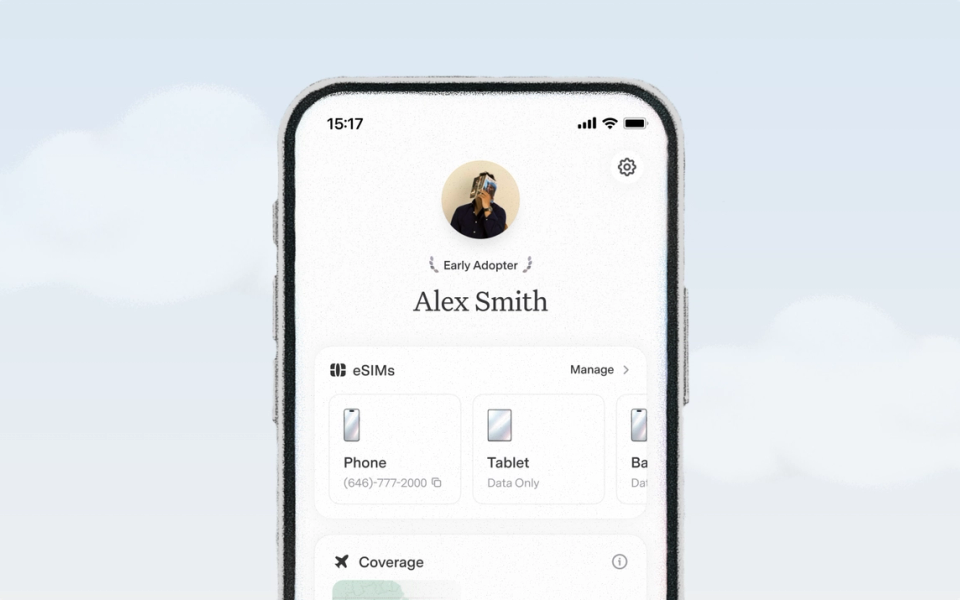
When one roaming network underperforms today, we provide a backup eSIM with multi-network coverage. In the US, that means access to all three major carriers. Abroad, it can connect to nearly every network globally.
It works. But it is still a workaround.
Our own core network brings that resilience into a single eSIM.
One profile will be able to connect to multiple carriers in each country, with local breakout that keeps data closer to the user and reduces latency. No switching profiles. No juggling eSIMs. No thinking about which network you are using.
The technical architecture becomes more sophisticated so the experience can become simpler.
We are deep in the integration now and expect to begin rolling it out in the coming months. It is the version of Popcorn we have wanted to build from the beginning.
Why multi-network coverage is only the beginning
Better coverage and lower latency matter. But they are not the only reasons we built our own core.
The bigger unlock is what controlling the software layer lets us build next.
We believe the phone call—the product the entire telecom industry was built around—is about to be rebuilt from scratch. When a carrier controls the layer between the network and the user, it can make calling programmable and intelligent in ways a traditional carrier cannot.
We assembled an AI-native team around that belief.
Our Assistant is the first glimpse of what becomes possible. It sits on your line, screens spam, handles calls you do not want to take and can act on your behalf. It is still early, but our spam-detection models are already improving every day.
On our new network, Assistant will become native to the calling experience—including through the iPhone dialer—rather than feeling like a separate feature sitting beside it.
Connectivity is the foundation. Intelligence is what we can build on top of it.
Building a new kind of global carrier
The telecom industry traditionally separates the network from the software and the software from the customer experience.
We think the future brings those layers together.
A global carrier should be able to choose the best available network, route traffic intelligently and build AI directly into the phone service. It should get better through software rather than waiting for the next generation of radio hardware.
That is why we are building our own mobile core. Not because most people will ever care what a mobile core is, but because they will care about what it makes possible.
One eSIM. More networks. Faster global connectivity. A phone plan that can finally evolve as quickly as the rest of technology.
Help us build it
We could not have made this progress without the Popcorn community.
We are a small, ambitious team that reads and responds to every message. Many of our earliest users are still in personal chats with us, helping shape the product as we build it.
This next chapter is the most ambitious thing we have done. We will need your help.
Try it. Break things. Tell us what works and what does not.
The roadmap is shaped by the people who use Popcorn. If you have read this far, you are probably one of them.
FAQs
What is the difference between a light MVNO and a heavy MVNO?
A light MVNO mainly resells service from a host carrier and controls areas such as pricing, billing and support. A heavy MVNO operates its own mobile core, giving it more control over SIMs, traffic routing, network relationships and the customer experience.
Does Popcorn own cell towers?
No. Popcorn partners with mobile networks for radio access while building and operating the software core that controls how its service works across those networks.
Why does Popcorn need its own core network?
Owning the core allows Popcorn to bring multi-network connectivity into one eSIM, reduce latency through local breakout and integrate AI directly into the calling experience.
When will Popcorn’s new network become available?
The mobile core is running and connectivity is being tested. Popcorn expects to begin rolling out starting fall 2026.